Rehearsals for a Revolution [TIFF 2026]: The perpetual tragedy of Iran
15 min to read
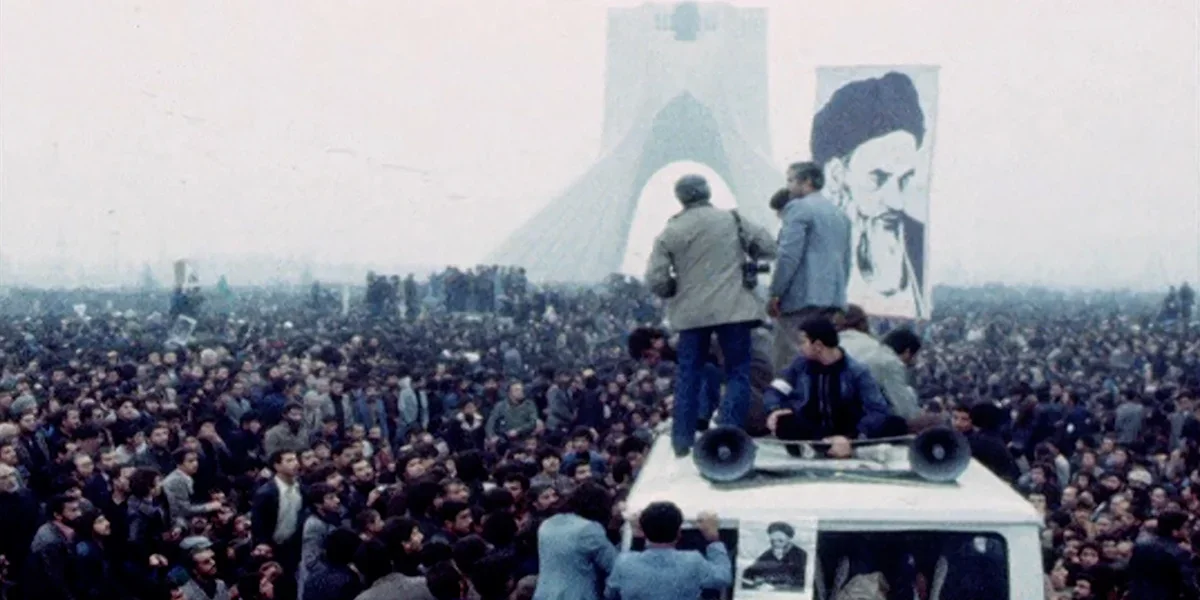
Strewn together like a visual memoir by Pegah Ahangarani, "Rehearsals for a Revolution" is an intimate and heartbreaking portrayal of her memories using archival footage of her own and of her family through decades of personal and political turmoil in Iran — from the revolution of 1979 to the massacres and war of the present day (2026). This documentary is less a factual summary of what happened and more a collection of bitersweet love letters (separated by chapters) to her father, Jamshid; her uncle, Rashid; her teacher, Shermin; her friend, Amir and her little daughter, Lily — all of which are their own unique characters that weave a narrative that goes beyond the specificity of Iranian culture, touching upon the tragic aspects of human nature in general. And yet precisely in this manner Ahangarani leaves a mark on the viewers: by reminding us that if you pay attention and look close enough, you will see the sliver of humanity that is universal, even in the darkest of times.
Chapter 1 is dedicated to her father, especially to his student years. He wanted to be a filmmaker before the revolution and always had his camera with him. The revolution was a turning point for the country, but we also see that transformation through him, although not at first. Ironically, her father (and many other young people from his generation) had a lot of hope for this change. Ayatollah Ruhollah Khomeini was the architect and leader of the 1979 Iranian Revolution, which overthrew the regime of Mohammad Reza Shah Pahlavi and established an Islamic republic. In that year a national referendum happened, in which Iranians voted overwhelmingly to abolish the monarchy in favor of an Islamic Republic, with Khomeini as its supreme leader and religious authority. What followed in the next few decades though, was a lot of bloodshed and gradual supression of civil liberties, culminating in the brutal massacre of citizens in 2026 (circa 30.000).
In the documentary, Pegah reveals how even during the revolution her father started having doubts over his allegiances. It happened after he witnessed some of his compatriots being beaten and tortured by Khomeini's guards. After that incident, her father never picked up a camera again. Instead, it was her mother who pursued filmmaking through the sheer power of will — she was one of the only females in numerous film crews over the years. Pegah's admiration for her mom is obvious: she directly inspired her, by example, to not give up on acting (and eventually filmmaking).
Chapter 2 may be the most heartreaking part of the documentary. In it Pegah introduces the story of her uncle, Rashid. All that is left of him are 3 pictures from his childhood, a short video recording of him as a young boy and lots of audio tape recordings during the 1999 student protests, which may as well be considered his audio-journal. They start quite optimistic, we hear a hopeful Rashid, quite funny I may add (with subtle ironic remarks about Iranian society), a young student who anticipates a seismic event. He eventually turns out to be right, just not in the way he hoped.
The protests initially started as a peaceful demonstration against the closure of the reformist newspaper "Salam" and the passage of a restrictive press law. Young people in Iran were starting to notice how their civil liberites were being eroded with every passing year, and they wanted change (or at least they yearned for things not to become worse). Khomeini's authorites responded with extreme violence: on July 8th, they stormed the university dormitories, beating students, torturing them and throwing them from windows. This sparked several days of nationwide unrest, drawing tens of thousands of people in the streets of Iran and other major cities. Some were killed and thousands were arrested. Rashid was one of the arrested ones; he was put in solitary confinement for a few months, while also (most likely) being tortured.
When he got out of prison, he was a changed man, and we notice it through his audio recordings. This transformation is so painful that you cannot help but relate to a former idealist whose soul was completely broken. In the same year Rashid killed himself. Pegah draws us back to those 3 childhood pictures. We see them differently now, as we reflect on how Khomeini's brutal regime eradicated any hope out of many young people's lives. We see a baby Rashid, with his intense dark eyes, almost too mature for his age, with a brooding expression, thrown into a society he did not choose, mauled by it and essentially forced to end his own life. For some reason the tragic end of Rashid's story reminded me of Winston, the protagonist of Orwell's 1984 — how his will was gradually broken by the regime, forcing him to give up at the end.
Chapter 3 introduces Shermin, Pegah's middle school teacher. She was the woman who encouraged Pegah to self-express and was nudging her to pursue her newly-found interest in acting. Shermin was an intelligent and kind soul, clearly limited by the theocratic society of Iran. In an event that ended up determining her fate, she asked Pegah to pick up the camera and record her at a house party, in an attempt to capture the little private joys of dancing without a headscarf. Those pictures eventually leaked throughout the whole school and everyone got to see her golden hair, for which she was severly shamed for. She was expelled from school. That event traumatized young Pegah, as she felt profoundly guilty, thinking it was her fault. But in some way that event was a blessing for Shermin, as we find out at the end of the documentary that she imigrated to Germany and seemed quite happy with her life.
Chapter 4 advances to the year of 2009's "Green Movement" — when Iranians voted in the presidential election. The results were announced unusually fast, claiming that the theocratic representative won 63% of the vote, defeating the reformist candidate (that many people hoped would win and force a regime change). Naturally, there was evidence of election fraud, and that sparked more protests. They were initially concentrated on counting votes fairly, but eventually turned out into a full-fledged anti-government manifesto; we hear the crowd shouting, "death to the dictator!".
Goverment's response was, of course, brutal — dozens of murders, thousands of arrests and even more draconian censorship on independent media and internet. In one particulary disturbing footage, we witness how those protests become violent firsthand, from Pegah's perspective, as she filmed the event. At one point she drops the camera, and another protester picks it up and films her for a few minutes, while they try to hide in someone's terrace; Pegah stops the shot and notices her own face, terrified, but also ignorant of what's to come. She sees this moment as a divide between her old self and one who eventually decided to leave Iran that year.
She picks the camera back up and continues filming. Police violently assaults the crowd and a particular shot still lingers in my mind. It was so brutal in its nature that I can never forget it. As Pegah's camera pans to a young woman that was dropped on the floor, a smaller crowd gathers around her to help her out, but the young woman's eyes are pointing into empty space. A second later blood is gushing out her mouth and Pegah's camera pans away. It catches the audience by surprise, as most of the documentary we are spared from brutal scenes. Pegah's choice to include that shot may be questionable by some, but in the light of what is to follow in 2026, it is also understandable; the same way Pegah's morbid curiosity made her not look away from that shot for a few seconds, we cannot pretend that things are fine in Iran and that people aren't (still) being murdered in the streets. Sometimes there is nothing more convincing than showing the factual truth, as painful as it may be to see it.
The crowd gathers back in the streets, forming into a huge mass of people. Pegah notices her close friend Amir, on top of a bus station, almost like a tribe leader, with his fists pumping in the air, chanting along with the river of people below. From a nearby apartment, someone throws confetti out of the window and it flies over the crowd, as they cheer gleefully amongst the bloodshed. Pegah's warm narrating voice mentions that this is the last time she saw Amir, and in that shot she regrets that her camera didn't capture his face too well; she imagined him smiling, if only for a moment.
We jump to the last chapter (#5), in which the walls between the audience and creator are slowly broken, Pegah reveals her initial plan of how she wanted to script it, seeing irony in the cliches of an immigrant who left her homecountry and "found a better life", but the reality turned out to be much more painful. As she was finishing the documentary, the massacres of january 2026 ensued, which were caused by a massive anti-government protest due to a severe economic collapse. The iranian government shut down the internet and cell service in attempt to subdue the scale of protests, murdering tens of thousands of people, with footages of body bags becoming a morbid reminder of the tragic toll.
Then the war with US ensued, which continues to this day. As Pegah dives into the details of this massacre, she steps back for a moment, questioning herself, "Why am I doing this? Why am I showing you the body bags, putting dramatic music behind the shots, in order to evoke certain feelings from you?" At that moment the documentary becomes a meta commentary on the role of a creator in the midst of such a huge scale of suffering.
She reveals that during that period (while already abroad) she got married and then got pregnant, thus in the present she has a sweet little todler, Lily. As the camera lingers on Lily's joyful, ignorant smile, Pegah reflects on her absurd situation and the schism that is forming in her mind. During the day, she takes care of Lily, during the night she is rewatching footages of protests and massacres. She has to finish the documentary, but she also needs to be with her daughter, to pay attention and to offer her the love and care she requires. We also see how Pegah's relationship with her family (mom, dad and relatives), that stayed in Iran, morfed into a long-distance-video-calling-kind-of-relationship, and how guilty she feels at times for not being there. Even while Tehran is being bombarded by US, she feels an irrational longing for the city.
But in the end she manages to pull back and talk to her daughter through the documentary, as if addressing her in the future, about her troubled feelings on Iran, her family, the tragic story of uncle Rashid, her teacher Shermin and her friend Amir; she realizes that her daughter hasn't yet known great suffering, in her eyes she sees the blissful ignorance, the pure soul that was born into this world and that wasn't ruined by it yet.
And in that life, in that new beginning, there is real hope, there is hope that future generations will have better lives than the decades of turmoil and tragedy the iranian people witnessed (and are still witnessing). And if that day is far away, today is a day in which we can be present; it's something we can manage, or at least we can try our best to be present for those who are yet to know the tragedies of humankind.
In the last shot, we hear Pegah's mantra, echoing to the audience: "Today was a fine day. Today was a fine day. Today was a fine day."
Rating: 10/10