Alexander Pushkin: Ruslan and Ludmila - book review
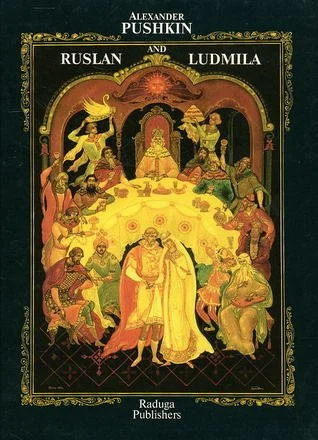
Pushkin wrote this poem / fairy tale when he was just 20, and it was his first major work that set him on the literary stage in the 18th century. In essence, the plot is familiar already: an evil wizard kidnaps the princess (Ludmila) and the hero (Ruslan) goes on an adventure to save her, while having some competition along the way. The story is set in Kievan Rus’. It’s a bit silly (sometimes on purpose, it’s a fairy tale after all), a bit long-winded in some scenes and underdeveloped in others; but overall, it’s well written (in Russian that is; I haven’t read the full English translation, but will quote some parts in this review—translation is not perfect).
It’s a long poem, and there’s a lot to it; however, I will highlight some parts so you could sense Pushkin’s style: expressive, passionate, flowing, fairy tale-ish, and yet, grounded in reality at the same time. It reminded me a bit of Goethe, and maybe some other mythology that I can’t put my finger on.
Later in the poem, there’s a beautiful piece where Ludmila reflects on her longing for her lover, Ruslan:
"Those who love truth and like to read
The heart's most secret book, must know
That should a lady, plunged in woe,
In spite of habit or of reason,
Oblivious of time or season,
Into a mirror through her tears
Forget to peek-well, then she is
In a most grievous state, indeed.
Ludmila, left alone again,
Uncertain what to do, beneath
A window stands and through the pane
Drear, boundless reaches, wondering, sees.
On carpets of eye-dazzling snow
Her gaze rests; filled is she with sadness....
Before her all is stark white deadness;
The peaks of brooding mountains show
Above the silent plains, and, somber,
Seem wrapped in deep, eternal slumber:
No wayfarer plodding slowly past,
No smoke from out a chimney trailing,
No hunter's horn resounding gaily
Over the snow-bound, endless waste....
Only the rebel wind's wail dismal
At times disrupts the calm abysmal,
And etched against the sky's bleak grey,
The nude and orphaned forests sway."
Original version:
“Те, кои, правду возлюбя,
На темном сердца дне читали,
Конечно знают про себя,
Что если женщина в печали
Сквозь слез, украдкой, как-нибудь,
Назло привычке и рассудку,
Забудет в зеркало взглянуть, —
То грустно ей уж не на шутку.
Но вот Людмила вновь одна.
Не зная, что начать, она
К окну решетчату подходит,
И взор ее печально бродит
В пространстве пасмурной дали.
Всё мертво. Снежные равнины
Коврами яркими легли;
Стоят угрюмых гор вершины
В однообразной белизне
И дремлют в вечной тишине;
Кругом не видно дымной кровли,
Не видно путника в снегах,
И звонкий рог веселой ловли
В пустынных не трубит горах;
Лишь изредка с унылым свистом
Бунтует вихорь в поле чистом
И на краю седых небес
Качает обнаженный лес.”
There’s another scene that stood out for me, when Ruslan witnesses the aftermath of a battle and reflects on his own mortality:
“Sad-eyed the knight around him gazes.
‘O field, wide field, you bear the traces
Of slaughter,’ says he with a sigh.
‘Who planted you to bones and why?
By whose fleet stallion were you trampled?
What bloody battle here was fought
With perseverance unexampled?
Who prayed here and salvation sought?
Why are you mute, why with the grasses
Overgrown of cold oblivion?
Is there escape from it for none?
Is it that time erases all?
What if upon some nameless hill
I am to lie? And the strings of the loud Bayan
Will never chant of me or on
My deeds dwell....’”
Original version:
"Со вздохом витязь вкруг себя
Взирает грустными очами.
'О поле, поле, кто тебя
Усеял мертвыми костями?
Чей борзый конь тебя топтал
В последний час кровавой битвы?
Кто на тебе со славой пал?
Чьи небо слышало молитвы?
Зачем же, поле, смолкло ты
И поросло травой забвенья?..
Времен от вечной темноты,
Быть может, нет и мне спасенья!
Быть может, на холме немом
Поставят тихий гроб Русланов,
И струны громкие Баянов
Не будут говорить о нем!'"
At the end of the tale, Pushkin describes the final battle—his description is simple but vivid. Again, his versatility reminds me of Goethe:
“Of the attackers boldly clashing.
The fray begins! In sudden fear,
As death they scent, steeds neigh and rear;
The riders, forward headlong dashing,
In battle meet, their steel swords flashing.
Sent forth in clouds, the arrows hum;
The fields turn red: with blood they run.
A man who's lost his war-horse faces
A horseman: which of them will smite
The other first? In wild-eyed fright
Across the field a charger races.
Death. Cries for help and battle-calls.
A Pecheneg, a Russian falls.
One's by an arrow pierced swift-flying;
Another's maced, his groan unheard;
A foeman's shield has crushed a third,
And, trampled on, he lies there, dying.
The fray went on till dark set in,
But neither warring side could win....
The slain in mounds lay; blood flowed freely;
Sleep claimed the living, all concealing
From their sight. Through the fearful night's
Long hours the wounded moaned in pain,
And one could hear the Russian knights
To their God pray and speak His name.”
Original version:
"Бойцы сомкнулись, полетели
Навстречу рати удалой,
Сошлись — и заварился бой.
Почуя смерть, взыграли кони,
Пошли стучать мечи о брони;
Со свистом туча стрел взвилась,
Равнина кровью залилась;
Стремглав наездники помчались,
Дружины конные смешались;
Сомкнутой, дружною стеной
Там рубится со строем строй;
Со всадником там пеший бьется;
Там конь испуганный несется;
Там клики битвы, там побег;
Там русский пал, там печенег;
Тот опрокинут булавою;
Тот легкой поражен стрелою;
Другой, придавленный щитом,
Растоптан бешеным конем...
И длился бой до темной ночи;
Ни враг, ни наш не одолел!
За грудами кровавых тел
Бойцы сомкнули томны очи,
И крепок был их бранный сон;
Лишь изредка на поле битвы
Был слышен падших скорбный стон
И русских витязей молитвы.”
P.S. Also, R.I.P Chernomor’s (the evil guy) beautiful beard. It will grow back bro, don’t stress.
Rating: 3/5